March 2- Saturday Continued
We (Phila, Mat, Buhle) went to the Wonderwerks Cave. It was pretty cool because they have found it is a place where people lived over an extended time of history, not a place of skeletons. The cave excavation is very evident and ongoing
and the markers made it interesting to imagine the archeologist's work and how they have
found things like stone tools and arrows dating back tens and hundreds of
thousands of years. The San (Bushmen) cave
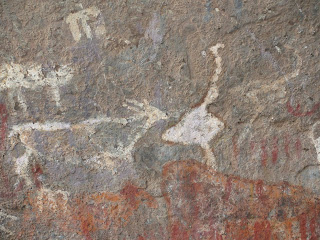
painting is very evident right at the entrance to the cave. Instead of the cave
evolving with water receding like the Sterkfontein Caves, they have to excavate the floor because the ceiling is falling in and the stone and dirt of years have built up
on top of where people lived. In addition, a farmer with is 3 girls and 11
sons who lived here built a stone platform over top of the cave floor to minimize
the dust while they were building their house.
 The entrance to the cave is very large but sheltered by the overhang.
 Pillar, Buhle and Mat
 How the cave rock formed.
 San cave paintings showing animals.



 Looking into the cave.- Pillar in hat.
 Looking down into an excavation area- look closely and you will see the ropes and tags that delineate each area into a manageable area about 1 foot by 2 feet.


 A walkway has been left down the middle with digging on both sides being done about 5 feet below the walkway.


After we left the cave we went to the Eye- the fresh water fountain of the
oasis in Kuruman (and why the Moffat Mission was located where it is). What a beautiful little park area with fish
and crabs and water lilies. It is truly
an oasis in the middle of town. I would
never have guessed it was there.


I am learning a lot being here from the place and the students. Johanna showed me a free downloadable version of the Bible with both English and Afrikaans which will be a wonderful resource. I am feeling a little disconnected though because though I haven't had a phone, now I do not have access to my email. At dinner I spoke with Ivan and Nteo and realized that I should bring my pictures of the World Parliament of Religion in Barcelona, Spain, the recent trip to Nicaragua, and my trips to Israel, Palestine and Jordan, and eventually South Africa into the class. I have them all on my computer and will need to work on organizing them! They are all different examples of multiple ways to engage in mission.